When I was growing up in the 1960s, horror films came in two varieties; there were American creature features like Them or The Thing, and then there was Hammer Films. Hammer had the smart idea to take classic horror icons such as Dracula, Frankenstein and the Wolfman and give them a bit of a polish--Technicolor, more realistic violence, and, most importantly, much better acting than was the norm in horror films. The style, professionalism and gravitas of Christopher Lee and Peter Cushing is what gave Hammer its unique appeal.
In truth, Hammer's output was very spotty. For every Horror of Dracula there was a piece of dreck like Twins of Evil. And even Hammer's best efforts can today be looked at as respectable, slightly earnest Masterpiece Theater-style attempts at horror. Nostalgia has made Hammer into something better than it actually was. The brilliance and appeal of Showtime's Penny Dreadful is that it gives us Hammeresque horror that actually matches up to our fond and fuzzy memories of Lee, Cushing & Co.
The central characters, or what turns out to be a sort of Marvel Avengers team of supernatural superheroes, are Dorian Gray, Viktor Frankenstein, Frankenstein's monster (called John Clare), the Werewolf, an Allan Quatermain clone, and Vanessa Ives, who is some variety of witch. Season one had the crew battling a vampire who has taken possession of Vanessa's childhood friend, Mina Harker. Yes, that Mina Harker. Season two has our late-Victorian heroes up against a coven of witches who want to offer up Vanessa to Satan for breeding purposes.
As is usual with limited run series on specialty channels, the plot is spread out very thinly over a few too many episodes. I can easily forgive that sin in this case. Penny Dreadful is a luxurious exercise in the visual and literary tropes of Victorian horror, with a dash of steampunk thrown in. The production design is sometimes breathtaking, the costumes magnificent, and the bloodletting is abundant. Even better is the acting. Eva Green as Vanessa is asked to chew up copious amounts of scenery and she does so with absolute gusto. It's a wonder she didn't permanently damage some facial muscles with all the weeping, screaming, howling and raging she's required to do. The other standout in the cast is Rory Kinnear as John Clare, Frankenstein's monster and easily the most complex character in the show. He's subject to murderous rages, but at heart he has the soul of a poet. Kinnear brings intense humanity to the role and banishes any comparisons with other actors who've played this character. Honourable mention goes to Simon Russell Beale as Ferdinand Lyle, in a performance that's so camp he must have channeled the spirit of Kenneth Williams. The only slightly disappointing thespian is Reeve Carney as Dorian Gray. Dorian is supposed to be a decadent, world-weary aesthete, but Carney makes him into more of a decadent, world-weary barista.
Penny Dreadful also earns marks for being dead serious about its basically absurd concept. John Logan, the screenwriter/producer, never gives the audience any knowing winks, and I think there's only one scripted joke in the entirety of the two series. This seriousness helps pulls the audience into the story because we never get the feeling that we're watching an homage or pastiche. Logan also gives his series an overall philosophical theme: the destructive and redemptive power of love. There's something you won't find in Hammer films. All of Penny Dreadful's main characters wrestle with the problem of love in all its forms: forbidden, unrequited, impossible, tragic, sexual, and platonic. In fact, Penny Dreadful could be described thusly: when loves goes wrong, the supernatural shit hits the fan.
Showing posts with label Hammer Films. Show all posts
Wednesday, August 12, 2015
Monday, December 22, 2014
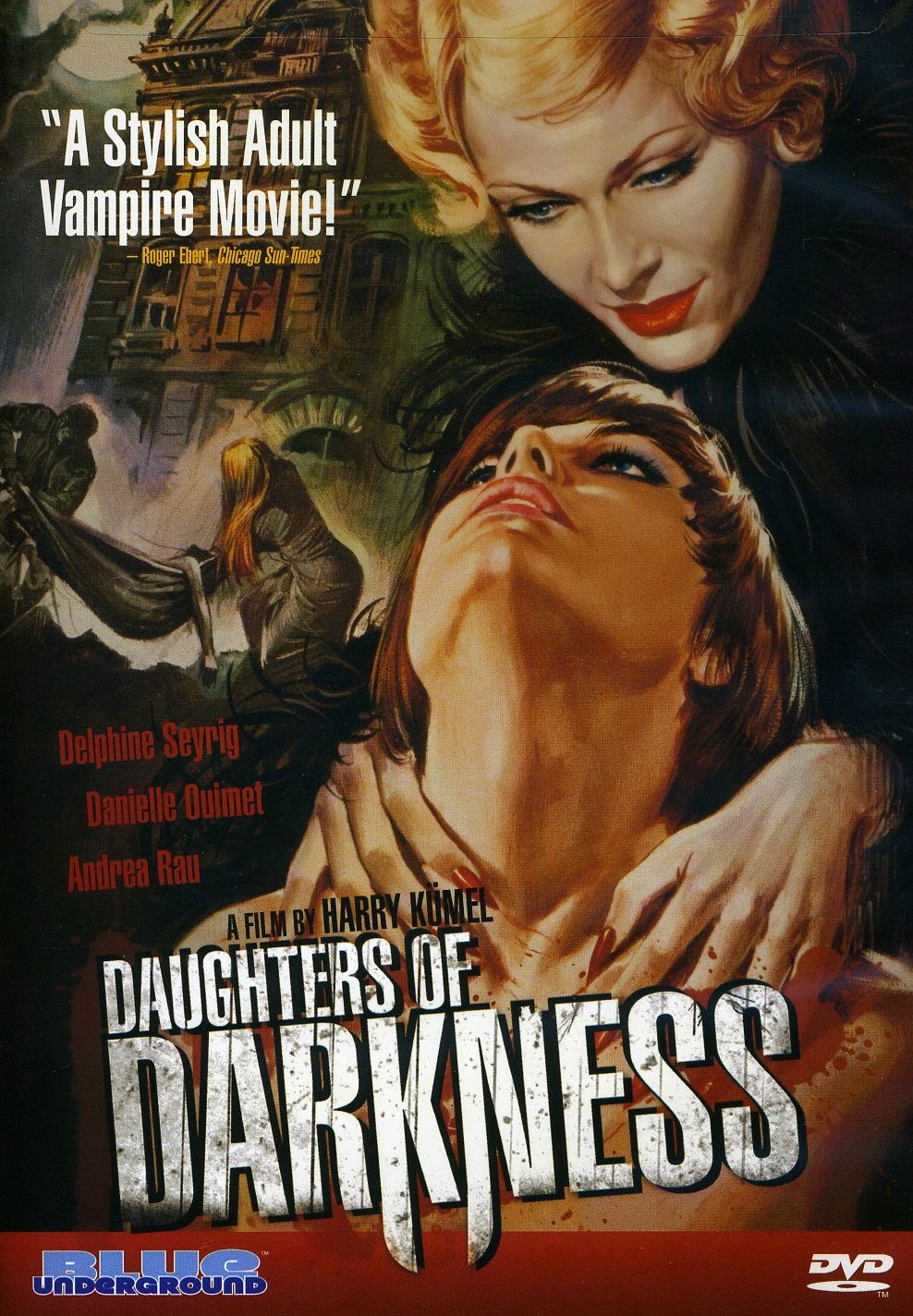
Film Review: Daughters of Darkness (1971)
If you're a horror film aficionado, Daughters of Darkness is one of the seminal films of the 1970s. I'd always been vaguely aware of it, but never made a point of seeing until I saw it featured in a 3-part documentary series on horror films done by Mark Gatiss, the co-creator and co-writer of Sherlock.
It's a contemporary vampire film about a young, attractive couple, Stefan and Valerie, who fetch up in a grand, Victorian-era beachfront hotel in Ostend, Belgium. They seem to be the only occupants of the hotel until a Countess Bathory appears with a beautiful female companion in tow. Bathory, played with languid elegance by Delphine Seyrig, is a centuries-old vampire, albeit one who seems as interested in haute couture as much as hemoglobin. The newlywed couple are supposed to be taking a ferry to England, but Bathory and her companion, Ilona, encourage the pair to stay, and it becomes clear that the Countess has her eye on Valerie as a possible replacement for Ilona. The plot has few surprises, and things end with Bathory reborn in Valerie's body.
Viewed from 2014, Daughters earns marks for moody cinematography (particularly its use of colour), nice costumes, and its creation of a suffocating atmosphere. But in the final analysis that doesn't come close to balancing out some dreadful acting, ESL dialogue, a sluggish pace, and some jagged plot holes (wait, does Stefan have a gay lover waiting for him in England?). From a 1971 perspective this film had it all: a stylish European look, a sharp break with genre conventions, and, most importantly, lots of nudity and sex, some of it lesbian! Yes, Daughters easily fulfills its early '70s transgression quota. Like so many films from that period that are remembered fondly or have achieved posthumous, as it were, critical regard, they are, at heart, exploitation films that have a patina of art and sophistication. As someone who grew up in that era, let me tell you that the appeal of these films lay entirely with the amount of violence and sex they offered.
What's increasingly forgotten about genre filmmaking in the late '60s and early '70s is that it was all about the R-rating (X for you in the UK). Film companies, especially the B-level ones like Hammer Films or Roger Corman's American International Pictures, but also, on occasion, the Hollywood studios, could make and market films purely on the basis that they offered t & a and/or guns and mayhem, and filmmakers were happy to push the then limits of what was acceptable to show on film. So on the one hand you have a film like Streetfighter (1974) banned in some quarters because it showed Sonny Chiba ripping an enemy's throat out with his bare hand in gory, Technicolor detail, and on the other there was Big Bad Mama (1974), a Bonnie and Clyde ripoff, that's actually about showing fading '60s star Angie Dickinson in the buff.
Filmmaking in the '70s was the culmination of a trend that began about ten years before. Films of the '30s, '40s and 50s were fairly democratic in their approach to audiences. Most Hollywood films were designed to appeal to all genders and ages, and even the B-movies of the '50s would mix in some romance to appeal to women, and nothing they put on the screen was graphic enough to keep kids out of the theatres. The release of Dr. No (1962) marks the beginning of a crucial change in how films were made. Lots of films were now being made to appeal exclusively to male tastes and fantasies. This testosterone-based cinema gained traction throughout the '60s as producers took advantage of relaxed censorship rules to bring in more graphic sex and violence. It was a pleasingly simple formula for them; no matter if the script was ramshackle, the director mostly drunk, and the actors more used to modeling clothes than reading lines, as long as enough blood was splashed around and some breasts were bared, profits were guaranteed.
Testosterone cinema was often good, crazy, dirty fun, but what's often glossed over is how enthusiastically misogynist it was, and Daughters doesn't miss out on this trend. The Valerie character is brutally beaten by her husband in one scene, and that's par for the course in a lot of the films of that era. Whether it was a counter-revolutionary reaction to Women's Liberation, or simply an effort to be transgressive, films of this period were filled with violence against women, particularly scenes of rape. In fact, rape may be the defining image of these types of films; from schlockmeisters like Russ Meyer to auteurs such as Sam Peckinpah, Sergio Leone, and Stanley Kubrick, rapes and the threat of rape were a recurring theme in dozens of films. Rape was even played for laughs in films such as Butch Cassidy and the Sundance Kid and There Was a Crooked Man.
The spate of testosterone films that started in 1962 began to peter out (slowly) with the release of Star Wars and Jaws. The studios suddenly found (or realized once again) that films which appealed to the widest possible demographic produced massive profits. Films aimed at a male audience continued to be made, but their toxic levels of sexism and misogyny began to decline. The game-changing film in this regard was probably Alien, in which a beautiful woman gets to take charge, kick ass, show her smarts, and doesn't have to get naked. It's success made even B-movie producers realize that having a female character doing something, rather than just take her clothes off, made economic sense. Manly films made for manly men are still being made, but largely they've dispensed with the casual and comic brutality against women. The Expendables films, for example, are made for men, but there's nothing anti-feminist about them.
One unfortunate side effect from the testosterone era is that filmmaking and film criticism became entrenched as an all-male activity. The film industry was so relentlessly focused on satisfying male tastes and fantasies it sent a strong message to women that this art form was for men and men only. In the decades since then, women have slowly made inroads into the directing ranks, but film critics for major papers and magazines are still overwhelmingly male. This means that it's male opinions and tastes that largely define what's regarded as notable or worthy in films of the past and, to a large degree, in the here and now. And that brings us back to Mark Gatiss. Like most fanboys of '70s films (and I'm guilty of this as well), he glosses over the fact that this era, as much as it was filled with bold, innovative films, also represented the nadir of how women were depicted in films, both mainstream and otherwise. The occasional artistry of films like Daughters of Darkness shouldn't blind us to the fact that women became the collateral damage in films that were really all about pleasing male tastes.
It's a contemporary vampire film about a young, attractive couple, Stefan and Valerie, who fetch up in a grand, Victorian-era beachfront hotel in Ostend, Belgium. They seem to be the only occupants of the hotel until a Countess Bathory appears with a beautiful female companion in tow. Bathory, played with languid elegance by Delphine Seyrig, is a centuries-old vampire, albeit one who seems as interested in haute couture as much as hemoglobin. The newlywed couple are supposed to be taking a ferry to England, but Bathory and her companion, Ilona, encourage the pair to stay, and it becomes clear that the Countess has her eye on Valerie as a possible replacement for Ilona. The plot has few surprises, and things end with Bathory reborn in Valerie's body.
Viewed from 2014, Daughters earns marks for moody cinematography (particularly its use of colour), nice costumes, and its creation of a suffocating atmosphere. But in the final analysis that doesn't come close to balancing out some dreadful acting, ESL dialogue, a sluggish pace, and some jagged plot holes (wait, does Stefan have a gay lover waiting for him in England?). From a 1971 perspective this film had it all: a stylish European look, a sharp break with genre conventions, and, most importantly, lots of nudity and sex, some of it lesbian! Yes, Daughters easily fulfills its early '70s transgression quota. Like so many films from that period that are remembered fondly or have achieved posthumous, as it were, critical regard, they are, at heart, exploitation films that have a patina of art and sophistication. As someone who grew up in that era, let me tell you that the appeal of these films lay entirely with the amount of violence and sex they offered.
What's increasingly forgotten about genre filmmaking in the late '60s and early '70s is that it was all about the R-rating (X for you in the UK). Film companies, especially the B-level ones like Hammer Films or Roger Corman's American International Pictures, but also, on occasion, the Hollywood studios, could make and market films purely on the basis that they offered t & a and/or guns and mayhem, and filmmakers were happy to push the then limits of what was acceptable to show on film. So on the one hand you have a film like Streetfighter (1974) banned in some quarters because it showed Sonny Chiba ripping an enemy's throat out with his bare hand in gory, Technicolor detail, and on the other there was Big Bad Mama (1974), a Bonnie and Clyde ripoff, that's actually about showing fading '60s star Angie Dickinson in the buff.
Filmmaking in the '70s was the culmination of a trend that began about ten years before. Films of the '30s, '40s and 50s were fairly democratic in their approach to audiences. Most Hollywood films were designed to appeal to all genders and ages, and even the B-movies of the '50s would mix in some romance to appeal to women, and nothing they put on the screen was graphic enough to keep kids out of the theatres. The release of Dr. No (1962) marks the beginning of a crucial change in how films were made. Lots of films were now being made to appeal exclusively to male tastes and fantasies. This testosterone-based cinema gained traction throughout the '60s as producers took advantage of relaxed censorship rules to bring in more graphic sex and violence. It was a pleasingly simple formula for them; no matter if the script was ramshackle, the director mostly drunk, and the actors more used to modeling clothes than reading lines, as long as enough blood was splashed around and some breasts were bared, profits were guaranteed.
Testosterone cinema was often good, crazy, dirty fun, but what's often glossed over is how enthusiastically misogynist it was, and Daughters doesn't miss out on this trend. The Valerie character is brutally beaten by her husband in one scene, and that's par for the course in a lot of the films of that era. Whether it was a counter-revolutionary reaction to Women's Liberation, or simply an effort to be transgressive, films of this period were filled with violence against women, particularly scenes of rape. In fact, rape may be the defining image of these types of films; from schlockmeisters like Russ Meyer to auteurs such as Sam Peckinpah, Sergio Leone, and Stanley Kubrick, rapes and the threat of rape were a recurring theme in dozens of films. Rape was even played for laughs in films such as Butch Cassidy and the Sundance Kid and There Was a Crooked Man.
The spate of testosterone films that started in 1962 began to peter out (slowly) with the release of Star Wars and Jaws. The studios suddenly found (or realized once again) that films which appealed to the widest possible demographic produced massive profits. Films aimed at a male audience continued to be made, but their toxic levels of sexism and misogyny began to decline. The game-changing film in this regard was probably Alien, in which a beautiful woman gets to take charge, kick ass, show her smarts, and doesn't have to get naked. It's success made even B-movie producers realize that having a female character doing something, rather than just take her clothes off, made economic sense. Manly films made for manly men are still being made, but largely they've dispensed with the casual and comic brutality against women. The Expendables films, for example, are made for men, but there's nothing anti-feminist about them.
One unfortunate side effect from the testosterone era is that filmmaking and film criticism became entrenched as an all-male activity. The film industry was so relentlessly focused on satisfying male tastes and fantasies it sent a strong message to women that this art form was for men and men only. In the decades since then, women have slowly made inroads into the directing ranks, but film critics for major papers and magazines are still overwhelmingly male. This means that it's male opinions and tastes that largely define what's regarded as notable or worthy in films of the past and, to a large degree, in the here and now. And that brings us back to Mark Gatiss. Like most fanboys of '70s films (and I'm guilty of this as well), he glosses over the fact that this era, as much as it was filled with bold, innovative films, also represented the nadir of how women were depicted in films, both mainstream and otherwise. The occasional artistry of films like Daughters of Darkness shouldn't blind us to the fact that women became the collateral damage in films that were really all about pleasing male tastes.
Sunday, November 11, 2012
Film Review: Twins of Evil (1971)
So let's say you're a B-movie producer in 1966. To sell your product you create films that are just that little bit more sexy and violent than what the big boys are doing. The problem is that various censorship laws, and the prudishness of film distributors, prevent you from going the full monty. Fast forward only a few years and the barriers have come down. Yeehaw! Now you can get busy having those starlets doff their tops and have the boys in the props department lay in an extra drum or two of fake blood. In their eagerness to exploit the new freedoms a lot of the B-movie guys forgot they were also in the storytelling business. Twins of Evil is the blood-splattered cheesecake proof of this.
Hammer Films made Twins of Evil and it marks the beginning of their slide into irrelevance and bankruptcy. In the '50s and '60s Hammer made its name with cheap and cheerful horror films that were solidly crafted, stylish, and a bit edgy. Twins of Evil is entirely about blood and boobs. There's a vague, half-assed plot about witch-hunters and vampires, but the main purpose of the film is to show off as much cleavage as possible. You wouldn't see this many low-cut tops at a convention of Las Vegas cocktail waitresses. The twins of the title were played by real life twins Mary and Madeleine Collinson, and each girl's, er, twin set is on constant display. Really, it might have been more accurate to call the film Quadruplets of Evil.
The only plus to the cheesecake portion of the film is that Hammer actually took care to cast some attractive women. None of them could act, even slightly, but they knew how to fill out, or pop out of, a nightie. God, I wish I'd been legally eligible to see this film at the time it came out. The blood-soaked side of the film is really bad. The camera lingers pointlessly on blood geysering out of chests and necks but there's no style to it; it's all staged like a demo sequence in a special effects class. Even Peter Cushing, who plays the chief witch-hunter, seems bored with what's going on. Hammer never manged to figure out that they needed some wit and style to go along with the T & A and gore, and before the decade was over they'd disappeared like a vampire at dawn.
Hammer Films made Twins of Evil and it marks the beginning of their slide into irrelevance and bankruptcy. In the '50s and '60s Hammer made its name with cheap and cheerful horror films that were solidly crafted, stylish, and a bit edgy. Twins of Evil is entirely about blood and boobs. There's a vague, half-assed plot about witch-hunters and vampires, but the main purpose of the film is to show off as much cleavage as possible. You wouldn't see this many low-cut tops at a convention of Las Vegas cocktail waitresses. The twins of the title were played by real life twins Mary and Madeleine Collinson, and each girl's, er, twin set is on constant display. Really, it might have been more accurate to call the film Quadruplets of Evil.
Subscribe to:
Posts (Atom)